
Our expert in elbow surgery
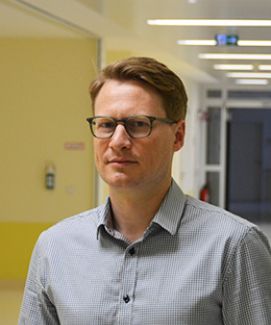
Dr Stefan Greiner
Doctor of Medicine. Privat-Docent. Sports orthopaedist, surgeon. Specialist in shoulder and elbow surgery.
Dr Stefan Greiner is a specialist in shoulder and elbow surgery. He studied medicine in Berlin and trained at the Charité University Hospital, where he later became head of the Department of Shoulder and Elbow Surgery for 10 years.
Concept of elbow dislocation
Elbow dislocation is a violation of the anatomical articulation of the three bones of the elbow joint (humerus, ulna and radius), accompanied by rupture of the capsule, damage to the ligaments, haemorrhage into the nearby tissues.
The capsular ligamentous apparatus of the elbow joint is a rather complex, peculiar and vulnerable anatomical node, which creates preconditions for the occurrence of various kinds of its injuries and dislocations.

Dislocation of the elbow joint is the second most common injury after dislocation of the shoulder.
Types of dislocations

Dislocations are distinguished by the following characteristics:
-
Complete or incomplete dislocation (in an incomplete dislocation, the articular surface is displaced but does not extend beyond the torn capsulo-ligamentous apparatus);
-
Dislocation of one or two bones of the forearm;
-
Fracture dislocations (dislocation may be combined with a bone fracture).
Depending on the time that has elapsed since the injury, a dislocation can be:
-
Fresh - up to 3 days;
-
Stale - up to 2 weeks;
-
Older than 2 weeks.
If the dislocation is repeated 3 or more times in one joint without significant physical impact, it is called - habitual. To it, anatomical features of the structure of the joint of congenital or post-traumatic nature lead to it.
Features of elbow dislocation
The nature of the dislocation is determined by the mechanism of damage to the joint. During sports training, there are often falls on the straightened arm, resulting in a posterolateral dislocation. If the fall was on a bent arm, an anterior dislocation may occur.
If the fall is on an extended joint with rotation, the axial force pushes the bones of the forearm apart and the humerus is wedged between them. The result of such an injury would be a divergent dislocation. This is a rare enough case that it requires special skill and practical experience of the surgeon to correct the dislocation properly.
Diagnosis of dislocations
Diagnosis of elbow dislocation is not difficult for a qualified traumatologist, who is a specialist in elbow pathology at our clinic. The patient usually holds the arm in an unnatural position, supporting it with the healthy arm. The injured joint looks deformed and swollen. An attempt to make any movement with the hand will be extremely painful. A posterior dislocation is characterised by a depression of the skin over the ulna, while an anterior dislocation is characterised by the absence of the top of the ulna.
To clarify the position of the bones, the doctor will perform delicate palpation of the injured joint, feel the condition of muscles and tendons. To exclude possible bone fractures, radiography of the injured joint in two projections is appointed.
Radiographic examination of a habitual elbow dislocation may show ossificates along the lateral ligaments, a flatter state of the semilunar socket, or improperly fused fragmentary fractures of the bones of the elbow joint.
Treatment of dislocations
Depending on the type of injury and the results of additional tests, the specialist trauma surgeon at our specialist medical centre will determine the treatment tactics for elbow dislocation.
According to German surgeons, the best results are achieved when treating fresh dislocations, so we recommend that you contact the coordinators of our centre as soon as possible after the injury.
However, our specialists guarantee a thorough examination of the condition of the joint after a long-standing injury and the selection of optimal treatment and rehabilitation tactics.

A fresh traumatic dislocation without a fracture is repositioned under general anaesthesia to ensure complete muscle relaxation. The procedure is performed by an experienced doctor with the help of an assistant. The joint is gradually straightened without sudden movements, the surgeon holds the lower part of the humerus, and depending on the type of dislocation, shifts the top of the ulna to the right side. Next, a bandage is applied and the joint is fixed in the desired position for a period of no more than 10-12 days.
If the dislocation is not fresh, but it has not been more than 12-14 days after the injury, it can also be attempted under anaesthesia, but all actions should be more delicate and careful. The experience and qualification of the surgeon is of particular importance here, as it is when correcting stale dislocations by inexperienced doctors that the neck of the humerus is often broken.
An outdated dislocation is not repaired, such a situation requires only surgical intervention (open repositioning), as the joint tissues have already partially scarred and the effort required for repositioning must be substantial, which will certainly lead to fracture of the adjacent bones.
Habitual dislocations of the elbow joint also require surgical treatment. German doctors use several surgical techniques to restore the stability of the capsulo-ligamentous apparatus:
-
Deepening of the semilunar notch using bone grafting;
-
Changing the area of muscle and tendon attachment;
-
Comprehensive plasticity of the joint (suture).
Each type of surgery has its own indications and side effects. Our surgeons have come to the conclusion that the most optimal is a combination of several types of operations and a qualified complex of rehabilitation measures.
Rehabilitation

After surgery and removal of fixation bandages, the patient is shown active development of the elbow joint under the supervision of an experienced rehabilitation trainer. It should be noted that all movements the patient must perform independently, violent assistance can only worsen the condition of the ligamentous apparatus. Massage and other physiotherapeutic procedures that accelerate tissue healing are not prescribed, as excessive scarring of the affected joint tissues is possible.
Functions and performance of the operated elbow joint are restored after 1.5-2 months.
Our surgeons, highly specialised specialists in elbow joint pathology, have performed a huge number of successful operations to treat elbow dislocation. Thanks to state-of-the-art surgical techniques, extensive experience, innovative equipment and individually tailored rehabilitation programmes, we have helped thousands of athletes to recover as quickly as possible and continue their professional training without compromising their health.


